
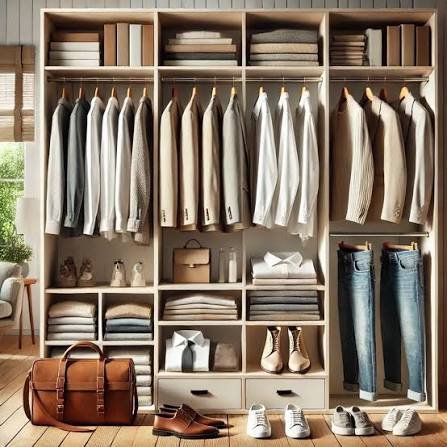
A messy closet is usually full, not empty. That’s the odd thing about clothes -the more you own, the harder it can get to actually get dressed in the morning. Minimalist dressing fixes that by keeping only what you’ll actually wear: a small set of pieces that fit well, hold up over time, and mix easily with each other. Fewer decisions, fewer mistakes, and a lot less time spent staring at a full closet feeling like you have nothing to put on.
Here’s how to actually build one.
Why a Smaller Wardrobe Works Better
Owning too much usually costs more in the long run: more money on things you barely wear, more time deciding what goes with what, more clothes falling apart because they were never made to last. Trimming down flips all of that:
- Pieces you keep get worn more, so cost-per-wear drops fast
- A tighter color palette means almost anything pairs with anything else
- Better materials hold their shape and color instead of wearing out in a few months
- Getting dressed stops being a daily decision and just becomes routine
Step 1: Go Through What You Already Have
Before buying a single new item, pull everything out of your closet and sort it into three groups:
- Keep – things you reach for often and actually feel good wearing
- Fix -good pieces that just need a tailor or a repair
- Donate or sell – anything untouched for a year, or that no longer fits your life
This alone usually shows you exactly what’s missing before you’ve spent a dollar.
Step 2: Pick a Core Color Palette
Stick to two or three neutrals – black, navy, grey, tan, olive, whatever suits you -and build the rest of your wardrobe around them. Once your colors line up, tops, bottoms, and layers start pairing with each other almost by accident. That’s really the trick to minimalist dressing: not fewer clothes, but clothes that can be combined in more ways.
Step 3: Buy for Fit and Fabric, Not Trends
A wardrobe like this holds up because it’s built on fit and material, not whatever’s trending this season. Look for:
- Natural fibers that age well – cotton, wool, leather
- Solid construction: reinforced seams, clean stitching, no loose threads
- A cut that actually suits your build, not just the one on the model
Step 4: Invest in a Handful of Staples
A minimalist wardrobe needs a few anchor pieces that can be worn a dozen different ways. A good leather jacket is one of the best examples; it layers over almost anything, works day or night, and looks better the more you wear it. If you’re shopping for one, TheLeatherCoats is worth a look, and their men’s jackets collection is a solid starting point if you want a single piece that can anchor most of your outfits.
A few other pieces worth spending on:
- A well-fitted white or light blue shirt
- A pair of dark, straight-leg jeans
- A plain crewneck sweater in a neutral color
- One good pair of leather boots or shoes
Step 5: Follow “One In, One Out”
Once the wardrobe’s where you want it, keep it there. Every time something new comes in, something old goes out. That’s it’s the simplest way to stop the slow creep back into clutter.
Step 6: Actually Take Care of What You Own
None of this works if your clothes fall apart in a year. So:
- Read the care label instead of guessing
- Condition the leather instead of letting it dry out and crack
- Store off-season pieces properly so they don’t get damaged
- Fix small problems before they turn into bigger ones
Final Thoughts
Dressing well doesn’t take a full closet -it takes the right closet. Build around a few pieces that fit, last, and go with everything else, and let go of the rest. You’ll spend less time deciding what to wear and end up looking better in the process.