A great burger deserves more than a box that simply keeps it contained. By the time a takeaway order reaches the customer, the packaging has already influenced the meal’s presentation, temperature, freshness, and overall experience.
That is why burger packaging boxes need to balance practical performance with attractive branding. A well-designed box keeps the burger secure while giving restaurants another opportunity to make their name memorable.
Freshness Starts With the Right Packaging
Burgers naturally produce heat and steam after preparation. If that moisture has nowhere to go, the bun can become soggy and fried ingredients may lose their crispness.
Packaging should therefore be selected around the food itself.
Factors worth considering include:
- Burger size and shape.
- Amount of sauces.
- Ingredients that release moisture.
- Delivery distance.
- Expected holding time.
- Temperature when the burger is packed.
A box designed specifically for the menu can perform much better than a generic container.
Ventilation Can Make a Difference
For some burger styles, strategically placed vents can help release excess steam. The goal is to manage moisture without allowing the food to cool too quickly.
There is no universal ventilation design. Restaurants should test packaging with their actual menu items to determine what works best.
Fit Matters More Than You Think
A burger that slides around inside a large box can arrive looking very different from how it left the kitchen. On the other hand, a box that is too tight can compress the bun and toppings.
The ideal package provides enough room while keeping the burger relatively secure.
A good fit can help maintain:
- Shape.
- Toppings.
- Presentation.
- Structural stability.
- Ease of handling.
Restaurants with different burger sizes may benefit from using more than one box dimension.
Turn a Takeaway Box Into Brand Recognition
Every takeaway order leaves the restaurant and enters the customer’s everyday environment. The packaging may be seen by family members, coworkers, friends, or even other potential customers.
This makes the box valuable advertising space.
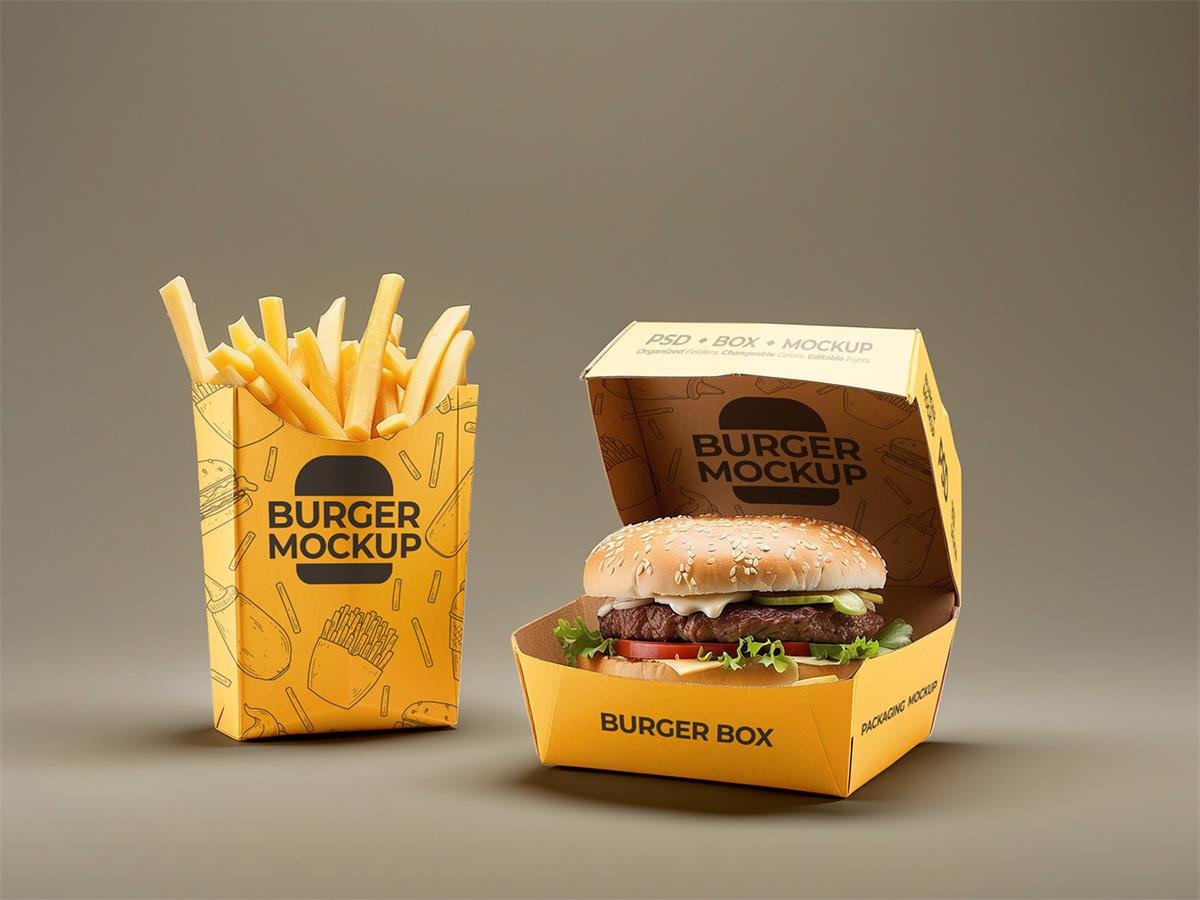
Add a Custom Box With Logo
A custom box with logo can immediately connect the meal to the restaurant. Rather than relying on generic packaging, businesses can create a recognizable visual identity through:
- Logo placement.
- Brand colors.
- Taglines.
- Illustrations.
- Patterns.
- Social media information.
The design does not need to be complicated. Sometimes a clean logo and consistent color scheme create a stronger impression than an overloaded design.
Make the Box Part of the Food Experience
Packaging should complement the burger.
A premium burger might call for a more refined design, while a casual fast-food brand may benefit from energetic graphics and bold typography.
Think Beyond the Exterior
The inside of the box can also become part of the experience.
A printed interior, short message, branded pattern, or playful illustration can surprise customers when they open the package.
These small details can make an ordinary takeaway order feel more considered.
Delivery Changes the Packaging Game
A burger served at a restaurant has a very different packaging journey from one delivered across town.
During delivery, the box may experience:
- Movement.
- Pressure from other bags.
- Temperature changes.
- Moisture.
- Repeated handling.
The package should therefore be tested under realistic conditions.
Perform a Simple Delivery Test
Pack a burger exactly as you would for a customer and allow it to travel for the expected delivery period.
Then check:
Does the burger still look good? Is the bun intact? Has condensation accumulated? Did sauces leak? Is the box still sturdy?
These answers can reveal more than a packaging sample sitting untouched on a desk.
Convenience Should Be Part of the Design
Customers want to enjoy their food, not struggle with the packaging.
A good burger box should be:
- Easy to open.
- Comfortable to carry.
- Stable when placed on a surface.
- Secure enough to contain the meal.
- Simple to dispose of.
Clever folds and closures can provide security without making the customer wrestle with the package.
Sustainable Choices Can Strengthen the Brand
Food businesses are also paying more attention to packaging waste.
Depending on product requirements and local recycling systems, restaurants can explore paperboard and kraft-based options, recycled content, paper-based components, and designs that reduce unnecessary material.
Different Burgers, Different Packaging Needs
A simple cheeseburger and a loaded gourmet burger may not require the same packaging.
A larger burger with multiple toppings may need additional interior clearance. Crispy chicken or fried components may require greater attention to moisture management. Specialty burgers may benefit from stronger construction to maintain their presentation.
Packaging should follow the menu rather than forcing every product into one standard format.
The most attractive design is not necessarily the most effective one.
A Better Approach to Burger Packaging
Before ordering in bulk, restaurants should evaluate the entire journey of the meal:
Kitchen → Box → Delivery → Customer → Unboxing → Eating
If the packaging performs well at every stage, it is doing its job. The design should protect the food, preserve its presentation, communicate the brand, and make the customer’s experience easier.
Conclusion
Burger packaging boxes are an essential part of the takeaway experience. They help maintain the burger’s condition, simplify transportation, and create an opportunity for restaurants to strengthen their visual identity. With a well-designed custom box with logo, even a simple takeaway meal can become a recognizable brand experience. The best packaging does not choose between function and appearance, it brings freshness, convenience, protection, and branding together in one practical package.