
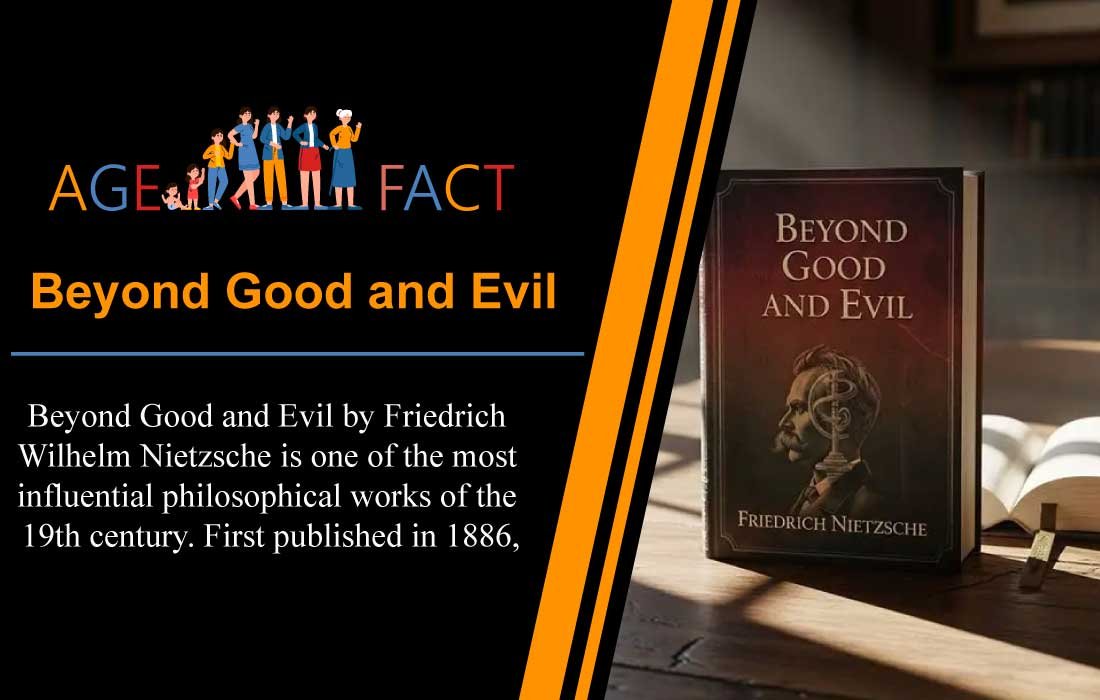
Beyond Good and Evil by Friedrich Wilhelm Nietzsche is one of the most influential philosophical works of the 19th century. First published in 1886, the book questions many beliefs people traditionally accept about morality, truth, religion, human nature, and philosophy. Nietzsche encourages readers to look beyond simple ideas of good and evil and examine where values come from. Written through a series of sharp arguments, reflections, and aphorisms, the book remains important for anyone interested in philosophy, psychology, morality, and independent thinking.
Beyond Good and Evil by Friedrich Wilhelm Nietzsche by Books
Beyond Good and Evil — Informative Book Table
| Information | Details |
|---|---|
| Book Title | Beyond Good and Evil |
| Original German Title | Jenseits von Gut und Böse: Vorspiel einer Philosophie der Zukunft |
| Author | Friedrich Wilhelm Nietzsche |
| Born | October 15, 1844 |
| Nationality | German |
| Genre | Philosophy |
| First Published | 1886 |
| Original Language | German |
| English Title | Beyond Good and Evil: Prelude to a Philosophy of the Future |
| Main Subject | Morality, philosophy, truth, religion, human nature, and values |
| Central Question | Whether traditional ideas of good and evil should be accepted without examination |
| Writing Style | Philosophical arguments, short sections, reflections, and aphorisms |
| Structure | Preface, 9 main parts, and an epilogue |
| Main Philosophical Approach | Critical examination of traditional philosophical and moral assumptions |
| Major Concept | The “free spirit” |
| Important Idea | Questioning inherited values and beliefs |
| Another Major Idea | Perspectivism and the influence of perspective on knowledge |
| Will to Power | An important Nietzschean concept concerning striving, growth, strength, and self-overcoming |
| Religion | Nietzsche critically examines Christianity and religious morality |
| Morality | The book investigates the origins and consequences of moral values |
| Truth | Nietzsche questions whether philosophical ideas about truth are completely independent of human motives |
| Human Nature | Explored through psychology, instincts, desires, ambition, and values |
| Free Spirit | An independent thinker who challenges established beliefs |
| Philosophers | Nietzsche examines the assumptions and personal motivations that can influence philosophers |
| Nobility | The final part explores the qualities and values associated with what Nietzsche calls the noble |
| Major Themes | Morality, truth, religion, freedom, power, psychology, individuality, and values |
| Number of Main Parts | 9 |
| Historical Importance | A major work in Nietzsche’s philosophical development |
| Influence | Philosophy, psychology, literature, cultural criticism, existentialism, and later philosophical movements |
| Overall Message | Think critically about inherited beliefs and examine the origins of the values people take for granted |
| Legacy | Remains one of Nietzsche’s most widely discussed and studied philosophical works |
| Best Known For | Challenging conventional morality and encouraging independent philosophical thought & More |