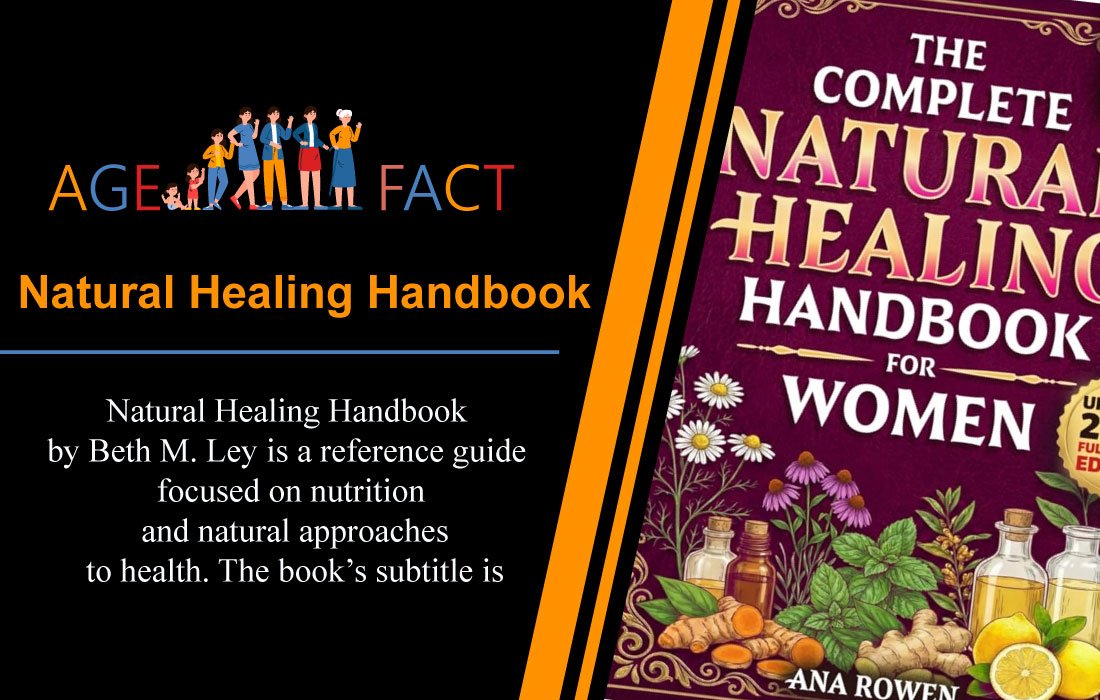
Natural Healing Handbook by Beth M. Ley is a reference guide focused on nutrition and natural approaches to health. The book’s subtitle is Get Back to Health—Naturally!, and catalogue records identify Beth M. Ley as its author. Available records point to early printings in the 1990s, although the publication details differ between listings and should be checked against the edition being reviewed. Rather than telling a story, the handbook is intended for readers looking up general information about nutrients and health concerns. It may interest people researching older natural-health literature, provided they read its advice critically.
Natural Healing Handbook by Beth M. Ley — Complete Information Table
| Detail | Information |
| Book Title | Natural Healing Handbook: Get Back to Health—Naturally! |
| Author | Beth M. Ley |
| Co-Writer | No co-writer confirmed |
| Subtitle | Get Back to Health—Naturally! |
| Publication Year | Early records suggest 1990, with a revised edition reportedly dated 1994 |
| Publisher | BL Publications appears in some records; another listing names Access Publishers Network |
| ISBN | 0964270315 / 9780964270312 |
| Genre | Health, nutrition, natural-health reference |
| Approximate Page Count | 340 pages in one catalogue listing |
| Original Language | English |
| Available Formats | Print editions and a digital document listed on Scribd; other formats need verification |
| Book Type | Reference handbook rather than a conventional narrative |
| Main Subject | Nutrition and natural approaches to health |
| Intended Audience | Readers interested in nutrition, natural-health literature, and older wellness reference books |
| Main Focus | General information about nutrition and health-related topics |
| Nutrition Topics | Broad nutrient groups, including carbohydrates, proteins, fats, vitamins, minerals, and water |
| Health Topics | Ailments and conditions are reportedly covered in a reference section |
| Central Idea | Encourages readers to explore the relationship between nutrition and general wellbeing |
| Reading Style | Topic-based reference format intended for looking up information |
| Best Way to Read | Use it as a historical reference and compare health claims with reliable, current medical sources |
| Potential Strength | Its reference-style organisation may help readers locate subjects without reading the entire book |
| Another Potential Strength | Its broad focus on nutrition may encourage readers to think about everyday food choices |
| Main Limitation | It is an older publication, so some information may not reflect current scientific evidence |
| Medical Reliability | Individual claims should be checked against up-to-date, trustworthy medical guidance |
| Is It a Story-Based Book? | No; it is primarily a health-information reference |
| Is It Suitable for Beginners? | Possibly, if readers approach its advice critically and verify important claims |
| Is It a Current Medical Guide? | It should not be treated as a substitute for modern clinical guidance |
| Recommended For | Readers researching the history of natural-health advice and older nutrition books |
| Less Suitable For | Readers seeking a definitive diagnosis or treatment plan |
| Author Background | Beth M. Ley is associated with books on health and nutrition; detailed biographical information should be verified |
| Other Book | DHA: The Magnificent Marine Oil (1998) |
| Other Book | Diabetes to Wholeness: A Natural and Spiritual Approach to Disease Prevention & Healing (2002) |
| Other Book | Castor Oil! It’s Healing Properties (2003) |
| Other Book | Flax! Fabulous Flax: Nature’s Best Source of Omega-3 Fatty Acids and Lignan Fiber! (2003) |
| Related Book | The Herbal Handbook: A User’s Guide to Medical Herbalism by David Hoffmann |
| Related Book | The Encyclopedia of Medicinal Plants by Andrew Chevallier |
| Related Book | The Complete Home Guide to Herbs, Natural Healing, and Nutrition by Jill Rosemary Davies |
| Related Book | Principles and Practice of Phytotherapy: Modern Herbal Medicine by Simon Mills and Kerry Bone |
| Overall Assessment | Potentially useful to readers exploring older natural-health literature, but its recommendations should be evaluated against current evidence |
| Important Caution | Natural does not automatically mean safe or effective. Readers should consult a qualified healthcare professional before changing treatment or taking supplements |
| Author Profile Link Placeholder | author profile |
| Health Disclaimer | This article is for general information only and is not professional advice. |
| Publication Details to Verify | Exact publication year, publisher, edition, page count, ISBN, and any co-writer |
| Content Details to Verify | Exact chapters, health conditions covered, and the book’s specific recommendations |
| Bibliography to Verify | Publication details and completeness of the author’s other-book list |
| Review Image Alt Text | Cover of Natural Healing Handbook: Get Back to Health—Naturally! by Beth M. Ley |
| Suggested Meta Description | Review of Natural Healing Handbook by Beth M. Ley, exploring its nutrition topics, key ideas, publication details and limitations & More |
Who Should Read This Book
What seems most useful about this handbook is its practical reference format: readers can approach it by topic instead of having to read from cover to cover. Its broad attention to nutrition may also prompt readers to think more carefully about everyday food choices. The main reservation is its age and the fact that natural-health claims can vary in evidential support; the book should not be treated as a current clinical guide. I would recommend it chiefly to readers interested in the history of popular natural-health advice, or those comparing older wellness books with reliable modern medical guidance.
| Reader type | Good fit? (Yes / Maybe / No) | Reason |
| Readers researching older health literature | Yes | It offers a historical perspective on popular natural-health writing. |
| People interested in nutrition | Maybe | It introduces broad nutritional topics, but current guidance should be consulted too. |
| Students researching alternative health approaches | Yes | It may provide material for historical comparison and critical analysis. |
| Anyone seeking treatment for a medical condition | No | It should not replace professional diagnosis, treatment or evidence-based medical guidance. |
FAQs
1. Who wrote Natural Healing Handbook?
The book is attributed to Beth M. Ley. Bibliographic listings identify her as the author.
Open Library+1
2. When was Natural Healing Handbook published?
Records refer to printings beginning in 1990 and a revised edition dated 1994 [VERIFY]. Confirm the date against the particular edition you are reviewing.
Open Library+1
3. What is Natural Healing Handbook about?
It is a reference work covering nutrition and natural approaches to health. Its described structure includes nutritional information and a section dealing with ailments and conditions.
4. Is Natural Healing Handbook suitable for beginners?
It may interest beginners who want to explore older natural-health literature. However, readers should check health claims against reliable, up-to-date medical sources rather than relying on the book alone.
5. Is Natural Healing Handbook available online?
A document with this title is listed on Scribd. The availability of complete text, reading access and other editions may vary, so check the specific listing.
Related Books You May Like
- ** The Herbal Handbook: A User’s Guide to Medical Herbalism by David Hoffmann** — A guide to herbal medicine and its traditional applications.
- ** The Encyclopedia of Medicinal Plants by Andrew Chevallier** — A reference work on medicinal plants and herbal traditions.
- ** The Complete Home Guide to Herbs, Natural Healing, and Nutrition by Jill Rosemary Davies** — Covers herbs, nutrition and natural-health practices.
- ** Principles and Practice of Phytotherapy: Modern Herbal Medicine by Simon Mills and Kerry Bone** — Examines herbal medicine with a more specialised, practice-oriented focus.
These are related in subject rather than necessarily sharing the same approach or evidential standards.