| Detail | Full Information |
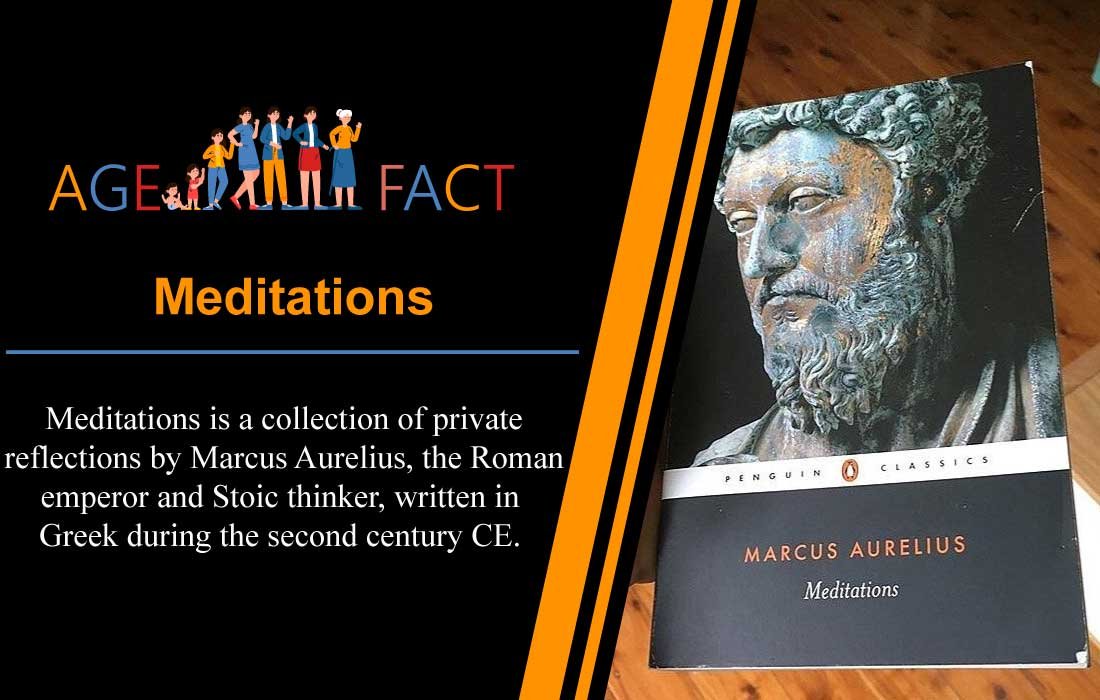
| Book Title | Meditations |
| Original Author | Marcus Aurelius, Roman emperor and Stoic philosopher. |
| Original Language | Ancient Greek. |
| Book Type | A collection of personal philosophical reflections rather than a conventional story or novel. |
| Main Genre | Philosophy, classical literature, Stoic ethics, and reflective nonfiction. |
| Philosophical Tradition | Stoicism, a school of philosophy concerned with virtue, reason, self-discipline, and ethical living. |
| Historical Period | The Roman Empire in the second century CE. |
| Composition Date | Generally associated with the later part of Marcus Aurelius’s life. The exact dates of composition remain uncertain. |
| Original Purpose | The writings are generally understood as personal reminders Marcus used to examine his behaviour and reinforce his philosophical principles. |
| Original Audience | Primarily the author himself; the text was not prepared as a conventional public-facing book. |
| Structure | Divided into 12 books, each containing reflections rather than a continuous narrative. |
| Narrative Style | Personal, reflective, direct, and sometimes repetitive, with recurring questions about conduct and character. |
| Central Subject | How to live with reason, maintain good character, fulfil responsibilities, and respond thoughtfully to life’s difficulties. |
| Main Theme | The importance of governing one’s judgments and actions rather than expecting complete control over external events. |
| Key Philosophical Focus | Virtue, reason, justice, restraint, responsibility, acceptance, and the temporary nature of worldly things. |
| Self-Discipline | Marcus repeatedly examines the need to manage impulses, resist unnecessary distractions, and act according to considered principles. |
| Control and Judgment | The reflections encourage readers to consider how their judgments shape their reactions to events and other people. |
| Human Relationships | The work discusses human cooperation, social responsibility, patience, and the need to behave fairly toward others. |
| Duty and Responsibility | Marcus treats the fulfilment of one’s responsibilities as an important part of ethical life. |
| Mortality | The temporary nature of human life, fame, and material circumstances is a recurring subject. |
| Nature and Reason | The book considers human beings as part of a wider natural order and connects ethical conduct with reason. |
| Fame and Reputation | Marcus questions the lasting importance of public recognition and the desire to be remembered. |
| Emotional Responses | The reflections encourage examination of anger, frustration, pride, and other reactions that can interfere with sound judgment. |
| Moral Character | The work places emphasis on how a person acts, not merely on what that person claims to believe. |
| Practical Philosophy | Rather than offering a formal step-by-step programme, the book presents repeated reminders intended to guide conduct. |
| Historical Significance | It is an important surviving work associated with Stoic philosophy and one of the principal sources for understanding Marcus Aurelius’s personal philosophical reflections. |
| Author’s Historical Role | Marcus Aurelius ruled as Roman emperor from 161 to 180 CE. |
| Author’s Lifetime | 121–180 CE. |
| Influence of Stoicism | Marcus’s reflections belong to a philosophical tradition that includes earlier thinkers such as Epictetus and Seneca. |
| Translation History | The work has appeared in many translations, with differences in vocabulary, style, and explanatory notes. |
| Notable English Translation | Meditations: A New Translation by Gregory Hays. |
| Translation Publisher | Modern Library published the Gregory Hays translation. |
| Translation Publication Year | 2002 for the Modern Library edition of Gregory Hays’s translation. |
| Approximate Page Count | The Modern Library edition translated by Gregory Hays is listed at 272 pages; page counts vary by edition. |
| Available Formats | Print and digital editions exist, depending on the publisher, translation, and market. |
| Intended Modern Readers | Readers interested in philosophy, ancient history, ethics, self-reflection, and personal development. |
| Reading Difficulty | Generally approachable in a clear modern translation, although some philosophical arguments and historical references require careful reading. |
| Reading Approach | Reading a few reflections at a time and considering their meaning can suit the book’s short, recurring entries. |
| Literary Strength | Its private, self-correcting tone gives readers a glimpse of philosophical ideas being applied to the author’s own conduct. |
| Possible Limitation | Its recurring themes and lack of a continuous argument may frustrate readers who prefer a tightly structured textbook or practical workbook. |
| Difference from a Self-Help Manual | It was not designed as a modern programme with exercises, worksheets, or a fixed sequence of personal-development steps. |
| Difference from a Novel | It does not have a fictional plot, conventional chapters of narrative action, or a cast of central characters. |
| Modern Relevance | Its reflections on responsibility, judgment, reputation, and change continue to provide material for contemporary discussion. |
| Best Reason to Read It | To explore how Stoic philosophy approaches ethical behaviour, difficult circumstances, and the responsibilities of everyday life. |
| Suitable for Beginners | Yes, particularly with a clear translation and helpful notes; readers unfamiliar with philosophy may need to pause and reflect on some passages. |
| Suitable for Students | Yes. It can support the study of Roman history, ancient philosophy, Stoicism, and ethical thought. |
| Suitable for Reflective Readers | Yes. Its short entries invite readers to consider their own decisions and behaviour. |
| Not Ideal For | Readers seeking a fast-moving story, a conventional biography, or a prescriptive self-help programme. |
| Related Stoic Work | Discourses by Epictetus, which explores Stoic ethics and philosophical practice. |
| Another Related Work | Enchiridion by Epictetus, a concise presentation of practical Stoic principles. |
| Related Roman Philosophy | Letters from a Stoic by Seneca, a collection of philosophical letters on ethical living and human concerns. |
| Overall Importance | Meditations remains a major work of Stoic reflection because it records an ongoing effort to connect philosophical principles with everyday conduct & More |