Every generation defines a “life skill” a little differently. Some point to learning to drive. Others say budgeting or building a solid resume. But one skill cuts across every age bracket and every stage of life: knowing what to do in the seconds after someone’s heart stops. Whether you’re a teenager babysitting for a neighbour or a grandparent watching grandkids at a birthday party, searching for Scarborough CPR training near me is often the first real step toward feeling capable instead of helpless when it counts. Cardiac emergencies don’t check identification, and most happen far from a hospital, often right at home in front of family.
Key Takeaways
- Cardiac arrest can happen at any age, most often at home rather than in a hospital.
- Safety awareness for young kids builds the foundation for later hands-on certification.
- Teenagers pick up hands-only compressions quickly and often need it for babysitting or lifeguarding jobs.
- Ontario workplaces have first aid staffing requirements that vary with the number of workers per shift and workplace needs.
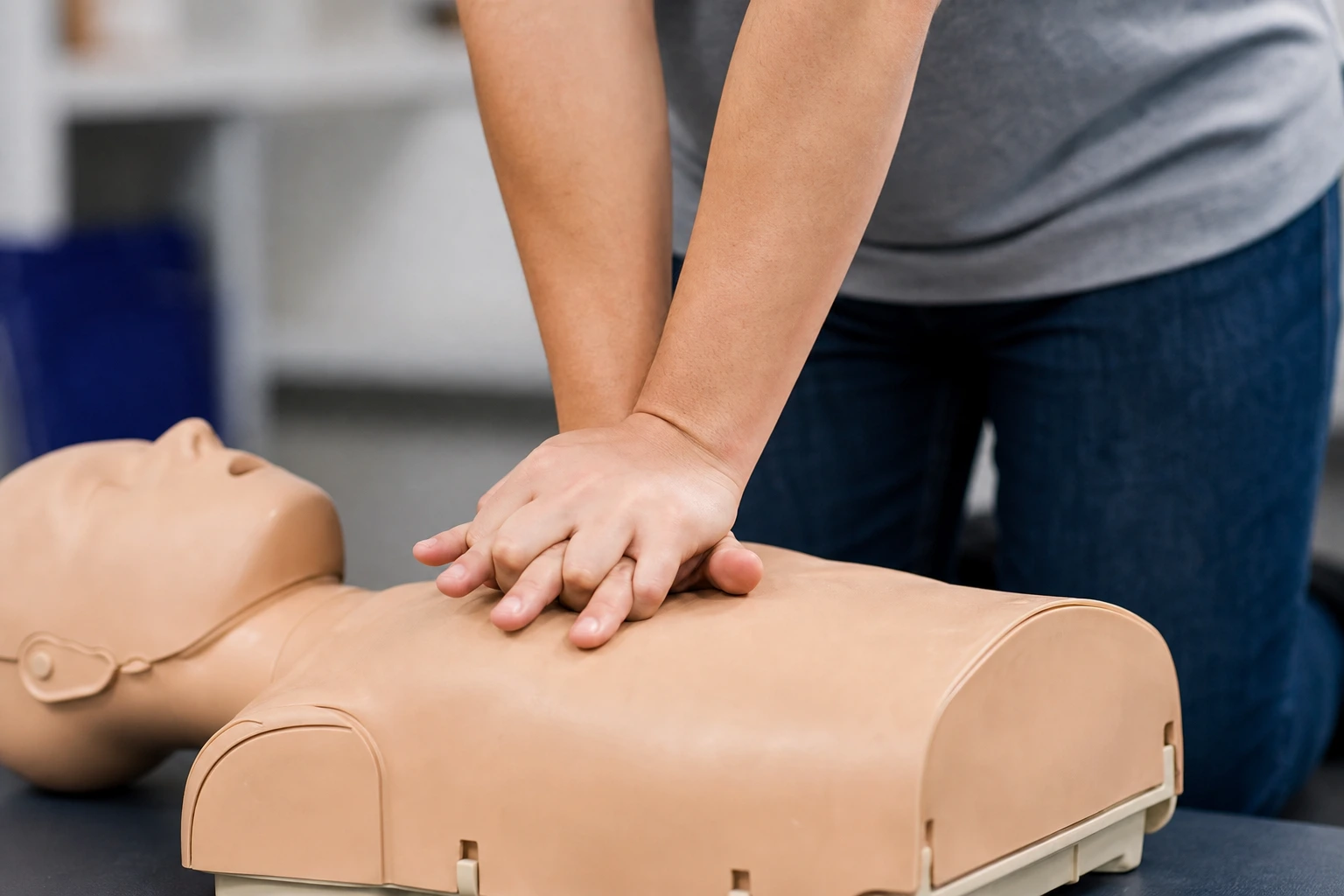
- Hands-only CPR is an accepted option for an untrained or unable bystander, particularly when an adult suddenly collapses; full CPR with rescue breaths remains important in situations such as child or infant cardiac arrest and respiratory emergencies.
Why Does Age Have Nothing to Do With Readiness?
Sudden cardiac arrest doesn’t check ID before it strikes. According to the Heart & Stroke Foundation, it can happen to people of any age, and most cases occur outside a hospital, often at home in front of family. The person best positioned to help in those first critical minutes is rarely a paramedic. It’s whoever happens to be standing nearby: a teenager who learned hands-only compressions in a weekend course, a retired teacher brushing up after a grandson’s hockey injury, or a new parent who wants to know what to do if a baby chokes. None of them need a medical degree. They need training, muscle memory, and the confidence to act.
Can Even Young Children Play a Role in Emergency Safety?
Nobody expects a seven-year-old to perform chest compressions, and that isn’t the point. Age-appropriate safety awareness starts far earlier than most parents assume. Simple lessons, like calling for help and staying calm, build the foundation formal CPR training builds on later. Families who talk openly about emergency basics tend to raise kids who act faster, not slower, once old enough for hands-on certification.
What Does CPR Training Look Like for Teens?
Teenagers get underestimated a lot. Give a fifteen-year-old clear, hands-on instruction, and they’ll retain it just as well as an adult, sometimes better.
For teens, first aid and CPR training isn’t just a resume line for a summer babysitting or lifeguarding job. It’s a genuine safety net. Many local sports leagues, camps, and part-time employers now expect younger staff to hold a current certification before working near children.
Why Do Working Adults Need to Revisit Their CPR Skills?
Adults tend to assume a first aid course from a decade ago still counts. It doesn’t, not really. Technique details shift over time, and confidence fades faster than most people expect once a skill sits unused.
Workplaces have a stake in this too. Under Ontario Regulation 1101 under the Workplace Safety and Insurance Act, covered employers must have at least one appropriately certified first aider on site, with first aid requirements varying by the number of workers per shift and workplace needs. Many employers follow WSIB-recognized standards for renewal timing, and a lapsed card can leave a shift short on safety coverage. Staying current isn’t just a compliance checkbox for office staff, retail workers, or tradespeople; it’s a real advantage the day something goes wrong on shift. Course catalogues and locations across the country are easy to browse online at https://www.c2cfirstaidaquatics.com/.
Is CPR Still Useful for Seniors and Retirees?
Absolutely, maybe more than for any other group. Seniors are statistically more likely to witness a cardiac event, whether it involves a spouse, a friend at a community centre, or a fellow volunteer. Yet many older adults assume the physical demands of CPR are beyond them now.
Modern training accounts for this. Instructors adjust technique guidance for joint limitations, and hands-only CPR is an accepted option for an untrained or unable bystander when an adult suddenly collapses; full CPR with rescue breaths remains important in situations such as child or infant cardiac arrest and respiratory emergencies. Grandparents who complete a course often say they finally feel useful instead of frozen if something happens on their watch.
How Does One Certification Benefit an Entire Family?
Picture a household with three generations under one roof. If even one person in that circle is certified, everyone nearby benefits from that knowledge being in the room.
- Turns a chaotic moment into a structured, practiced response.
- Shortens the time before compressions or an AED get used, which the Heart & Stroke Foundation links to survival odds.
- Models calm, capable behaviour for kids who notice more than adults realize.
Once one member completes training, others often follow.
About Coast2Coast First Aid
Coast2Coast First Aid & Aquatics was founded in Toronto in 2014 and holds the Top 3 Canadian Red Cross Training Partner distinction for 2023, 2024, and 2025, plus accreditation as a Heart & Stroke trainer. More than 150,000 students have been certified with a 99.9% success rate across 30+ locations in Canada and the United States. Digital certificates arrive within 48 hours of a successful evaluation, and every student gets a free 90-day skills practice retake.
If you’re looking for CPR and first aid training near Ellesmere Road, close to Brimley Road, or the Scarborough Town Centre area, or in the surrounding neighbourhoods, you may reach out to the Coast2Coast team in that area.
FAQs
Is CPR training only useful for adults? No. Teenagers, working adults, and seniors can all learn CPR effectively. Instructors adjust pacing and technique guidance for different age groups.
How often should someone renew their CPR certification? Most CPR and first aid certifications are valid for one to three years, depending on the course type. Many Ontario workplaces follow WSIB-recognized renewal schedules.
Can seniors physically perform CPR compressions? Many can. Hands-only CPR is an accepted option for an untrained or unable bystander when an adult suddenly collapses, while full CPR with rescue breaths remains important for children, infants, drowning, and other respiratory-caused cardiac arrests. Instructors can also provide technique guidance that accounts for physical limitations.
Do Ontario workplaces legally require first aid certified staff? Yes. Under Ontario Regulation 1101 under the Workplace Safety and Insurance Act, covered employers must have at least one appropriately certified first aider on site, with requirements varying by the number of workers per shift and workplace needs.
What is the difference between CPR training for kids and adults? Young children typically learn safety awareness basics, like calling for help and staying calm, rather than hands-on compressions, which is generally introduced in the young teen years and up.
This article is for general information and is not medical, legal, or claims advice. Workplace first aid and safety requirements vary by role and location; confirm specific obligations with WSIB and Ontario Regulation 1101 under the Workplace Safety and Insurance Act before finalizing a training plan.