
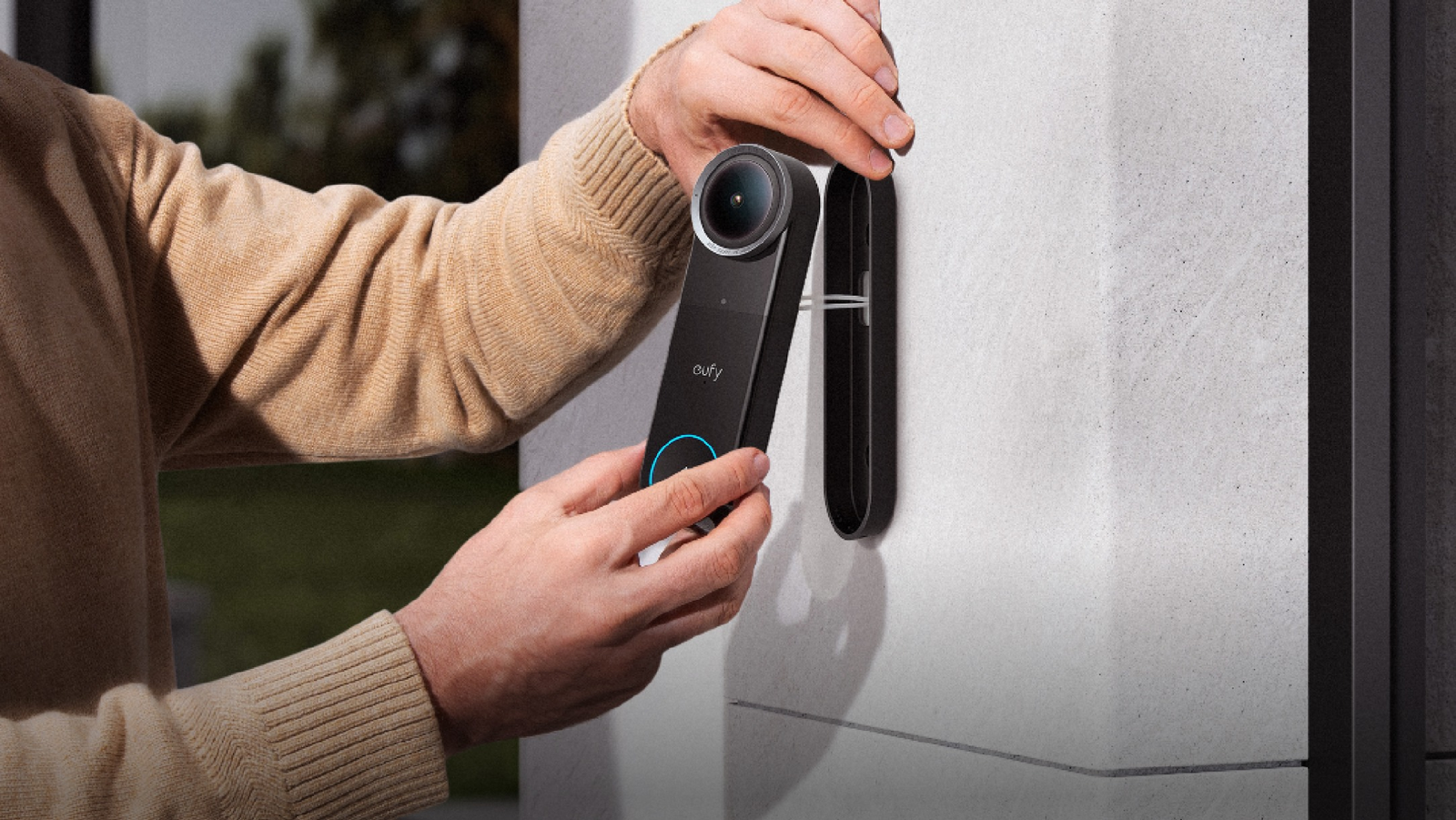
You were home all afternoon, yet there’s a delivery notice stuck to the front door. Someone pressed the doorbell button and nothing happened inside the house. Maybe the button has felt mushy for months, or the little light behind it went dark last winter and fixing it kept sliding down the to-do list.
A dead doorbell button is usually a cheap fix, though the button isn’t necessarily the part that failed. A worn-out chime or a transformer that has stopped supplying power can cause the same silence. What follows covers how to tell the three apart, when a basic doorbell replacement is all you need, and what you take on if you decide to move up to a video doorbell instead.
How a Doorbell Button Wears Out Over Time
A wired doorbell button is a simple switch. Pressing it closes a low-voltage circuit for a moment, the chime inside rings, and a small spring pushes the button back out. With so few parts involved, failures tend to follow a few familiar patterns: Corroded contacts. Years of humidity and temperature swings leave a film on the metal contacts, so a press stops completing the circuit or only works when you push hard. Water inside the housing. A button on an exposed wall takes in rain over time. If the chime starts ringing on its own during a storm, moisture at the button is a likely suspect. A stuck button. Grime, a coat of paint, or a tired spring can hold the button in, which leaves the chime humming or stuck partway through its ring. A dead backlight. Lighted buttons have a tiny bulb or LED behind the face. When it burns out, the switch itself often keeps working.
Since the button is the part people can see and touch, it gets blamed first. On a house where the same button has faced the weather for ten or fifteen years, that guess is often right. Still, two other parts sit on the same circuit, and checking them first can save you from buying a part you didn’t need.
Telling a Bad Button From a Chime or Power Problem
You can usually narrow it down without a multimeter. The button, the chime, and the transformer each fail in a different way, and the clues below are the same first pass a doorbell repair call would start with.
| What you notice | Likely cause | What it points to |
| Button feels loose or sticky, and the chime stays silent | Worn button | Replace the button |
| Chime rings only when you press hard or at an angle | Corroded contacts in the button | Replace the button |
| Chime rings by itself, often in wet weather | Moisture or a short at the button | Replace the button and have the wiring looked at |
| Chime hums or buzzes but doesn’t finish its ring | A button stuck in, or a worn chime | Check the button first, then the chime |
| Button light is out, but the chime still rings | Burned-out button light | Cosmetic, the doorbell still works |
| Button light is out and the chime is silent | No power on the circuit, often the transformer | Have the transformer checked |
When the evidence points to the transformer, keep in mind that it usually connects to your home’s 120V wiring. Anything on that side of the circuit is a job for a licensed electrician.
When a Simple Button Replacement Is Enough
Yes, you can replace just the button on a doorbell, and for plenty of homes that’s the sensible move. If the table above pointed to the button, the chime still sounds clear, and the circuit has power, a new button brings the doorbell back while everything else stays in place.
Are doorbell buttons universal? Standard wired buttons mostly are, since they’re basic two-wire switches. Two details can cause trouble. A lighted button can make some older chimes hum or ring weakly, and a button with a smaller faceplate may leave old screw holes or a paint outline showing.
A basic button replacement solves today’s problem. It works well if you only need to restore the ring and don’t have extra security or monitoring needs.
What Changes When You Upgrade to a Video Doorbell
There are several scenarios where upgrading to a video doorbell makes more sense than swapping hardware:
- Packages get left while you’re home because the chime doesn’t carry to the back of the house.
- You’d rather know who’s outside before you open the door.
- The house is empty most of the day and you’d like to know what goes on at the porch.
If one or two of these match your situation, the wiring already running to your button makes it easy to move to wired video doorbells, which connect to those same two wires. Whether your transformer can support one is the next thing to look at.
A video doorbell asks more of your home than a plain button does:
- Transformer. A video doorbell may need more power than a basic button. Check the transformer’s output label for its AC voltage and VA rating, then compare both with the requirements for your doorbell model.
- Wi-Fi at the front door. Live video needs a steady upload connection at the spot where the doorbell is mounted, which is often the far end of the house from the router.
- Storage. Recordings need somewhere to live, whether that’s on the doorbell, on a home hub, or in a cloud plan.
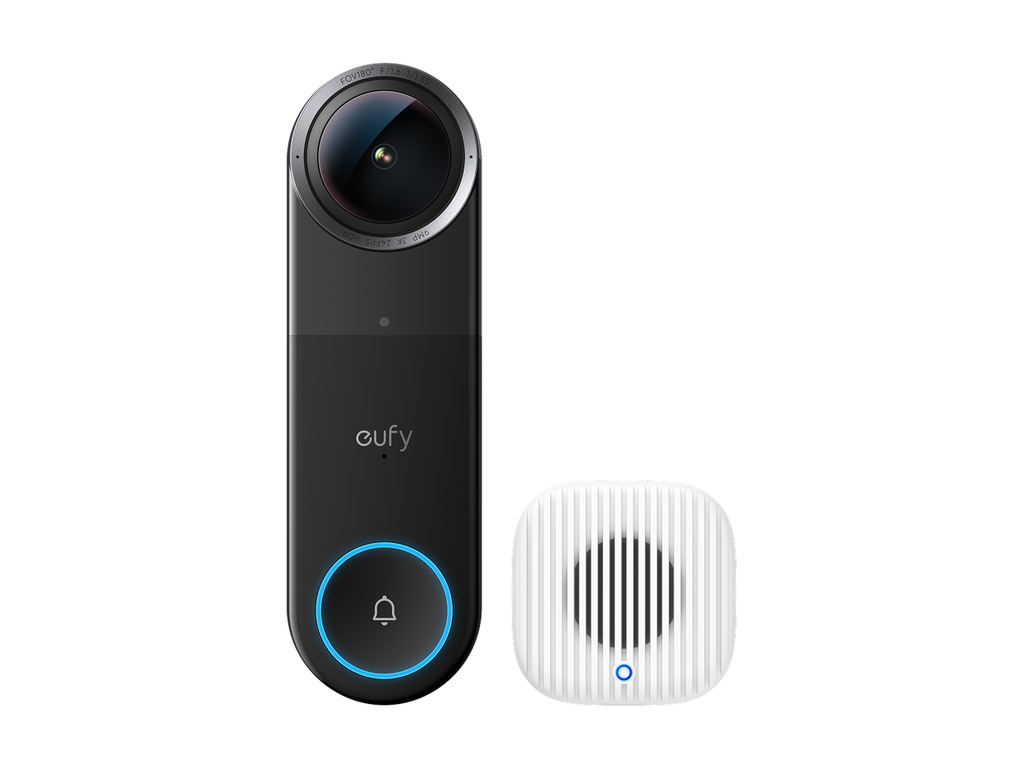
The eufy Video Doorbell S4 is one example. If you’re upstairs or in the backyard when a courier presses the button, your phone rings like an incoming video call, and one tap lets you see and talk to them from anywhere in the house. The included eufy Chime 2 rings indoors only when someone presses the button, not each time someone walks past.
| At your door | What the S4 does |
| Checking who’s there before you open | 180° × 180° view shows visitors head to toe, with color night vision after dark |
| A package left on the step | Package detection sends an alert |
| Nobody home | Radar and PIR sensors alert on people, not leaves or shadows |
The S4 is wired-only and runs on the same two wires as your old button, as long as they supply AC 16 to 24V and 10VA to 40VA.
Conclusion
A silent doorbell comes down to one question first: which part stopped working? If the button is worn, corroded, or stuck, a replacement is quick and inexpensive, and the chime and wiring you already have can stay.
Upgrading is a separate decision. A new button brings back the ring, while a video doorbell makes more sense if you keep missing deliveries or want to see who’s outside before opening the door. Check your transformer rating and the Wi-Fi signal at the front door, and if both line up, compare wired models that match the setup you already have.