
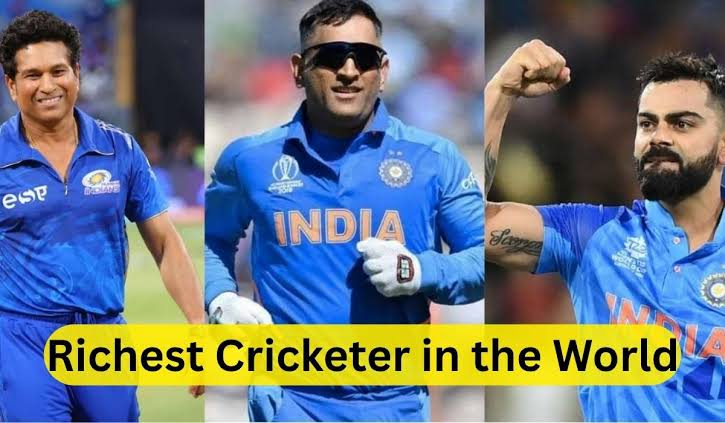
Sachin Tendulkar is widely placed first in 2026 estimates of the richest cricketer in the world, with a reported net worth of about $170 million. MS Dhoni and Virat Kohli follow in most recent published lists, underlining the financial scale that elite cricket careers, commercial partnerships and post-playing ventures can create. These figures should be read as estimates rather than verified personal accounts, but they offer a useful view of cricket’s biggest long-term commercial successes.
The estimated top 10 in 2026
A June 2026 ranking placed Tendulkar at the top, followed by Dhoni and Kohli. The list combines players from India, Australia, the West Indies and South Africa, showing that wealth in cricket is not limited to one national team or one era. It also includes retired greats whose earnings continued through coaching, broadcasting, endorsements and business interests after their playing days.
| Rank | Cricketer | Country | Estimated net worth in 2026 |
| 1 | Sachin Tendulkar | India | $170 million |
| 2 | MS Dhoni | India | $125 million |
| 3 | Virat Kohli | India | $120 million |
| 4 | Ricky Ponting | Australia | $75 million |
| 5 | Brian Lara | West Indies | $60 million |
| 6 | Jacques Kallis | South Africa | $48 million |
| 7 | Shane Warne | Australia | $45 million |
| 8 | Virender Sehwag | India | $42 million |
| 9 | Yuvraj Singh | India | $38 million |
| 10 | Rohit Sharma | India | $35 million |
Net-worth lists naturally change according to the valuation method, currency conversion, business holdings included and timing of the estimate. For instance, a 2024 ranking also had Tendulkar first at $170 million, but put Dhoni at $111 million and Kohli at $92 million. Such variation is a reminder that rankings are best treated as broad indicators, not precise financial statements.
Why Sachin Tendulkar remains first
Tendulkar’s place at the summit reflects a combination of a long international career, lasting public recognition and commercial strength after retirement. He retired from all forms of cricket in November 2013 after his 200th Test, yet his association with the sport has retained major value. A cricket career can create fame, but maintaining relevance long after the final match is what separates a highly paid player from a long-term sporting business figure.
His estimated $170 million valuation was consistent across the 2024 and 2026 lists available here. That continuity does not prove the figure exactly, but it does show the unusual durability of his commercial standing. Tendulkar’s achievements and popularity made him a leading figure for endorsements and business ventures, while his retirement did not remove him from cricket’s public conversation.
Dhoni and Kohli represent two different career models
MS Dhoni’s estimated 2026 wealth of $125 million reflects the financial potential of leadership, popularity and commercial diversification. His international career ended in 2020, but he remained one of India’s most recognisable sporting personalities. Published accounts have linked his wealth to endorsements, sports ventures, agriculture projects and other business investments. His stature as a captain and wicketkeeper also gave him a public identity that extended beyond match results.
Virat Kohli, estimated at $120 million in the 2026 ranking, illustrates the modern active-player model. His income profile has been associated with cricket contracts, brand partnerships, fitness ventures, fashion businesses and social-media influence. Kohli announced his retirement from Test cricket in May 2025, according to Cricbuzz, but he featured in India’s ODI matches against New Zealand in November 2026. His continuing profile highlights how players can remain commercially significant while adjusting their role across formats.
For fans studying how form, history and player roles shape interest around a fixture, resources covering Cricket Match Prediction can complement the broader discussion around cricket’s most prominent names. Financial standing, however, should never be confused with a guarantee of current on-field performance.
The lasting value of retired international greats
Ricky Ponting’s estimated $75 million placed him fourth in the 2026 list. The former Australia captain remained connected to the sport through coaching, broadcasting and franchise-league involvement. That path is common among leading former players: specialist knowledge and a recognisable name can sustain income after international retirement, particularly where coaching and media roles are concerned.
Brian Lara, fifth at an estimated $60 million, also demonstrates the enduring commercial strength of elite achievement. His ranking has been linked to his cricket career, endorsements, media appearances and cricket-related roles. For sporting icons, landmark performances can preserve public interest for decades, creating opportunities that would not be available through playing contracts alone.
Jacques Kallis, estimated at $48 million, ranked sixth. His post-retirement career has included coaching and cricket consultancy work. Players with deep technical expertise can create a second professional chapter by helping teams, developing players or providing analysis. These roles may receive less attention than endorsement campaigns, but they can be important parts of long-term earnings.
Warne, Sehwag and Yuvraj built profiles beyond playing
Shane Warne’s estimated $45 million valuation in the 2026 list recognised his playing legacy as well as work as a commentator, mentor and cricket ambassador. The 2024 list valued him higher at $50 million, again illustrating why exact figures should be treated carefully. The broader point remains clear: a distinctive personality and specialist role can carry financial value after a player leaves the field.
Virender Sehwag, eighth at an estimated $42 million, has remained visible through commentary, digital content, business ventures and endorsements. His case shows the importance of communication in the modern sports economy. Former players can reach audiences directly through media and online platforms, rather than relying only on traditional television roles.
Yuvraj Singh ranked ninth at an estimated $38 million. His move into entrepreneurship and investment was identified as a key factor in strengthening his financial portfolio. The range of activities attached to his name reflects a wider shift in cricket: players increasingly develop commercial interests that are independent of their playing contracts.
Rohit Sharma and the importance of active commercial appeal
Rohit Sharma completed the estimated top 10 with a valuation of $35 million. His earnings were linked to international cricket, sponsorship agreements and endorsement partnerships. While historic legends dominate much of the list, Rohit’s presence shows that active players can build substantial commercial value through performance, visibility and sustained association with major teams and competitions.
The comparison between current and retired players is not straightforward. Retired stars may have had more time to develop investments and media work, while active players often benefit from immediate visibility, ongoing contracts and large audiences. Age, career stage and the types of business activity involved all affect where a player may sit in a wealth ranking.
What these rankings really measure
Cricketers do not build wealth through match fees alone. The main routes identified across the leading names include international contracts, franchise leagues, endorsements, business investments, real estate, social-media partnerships, broadcasting, coaching and personal brands. A player’s financial profile is therefore usually the result of several income streams accumulated over many years.
It is also worth separating career earnings from net worth. Earnings are money received over time, while net worth is an estimate of assets minus liabilities at a particular moment. Public lists rarely have access to every investment, expense, tax obligation or private holding. That is why the order may be more meaningful than the exact dollar amount attached to each name.
Conclusion
Sachin Tendulkar remains the strongest answer to the question of who is the richest cricketer in the world, based on the available 2026 estimates. Yet the bigger story is how cricket’s leading players have converted sporting achievement into durable careers across business, media, coaching and endorsements.